When clients come to us seeking support for their managers in management and leadership, two aspects stand out in their expression of needs: increasing performance and improving behavior among employees. The division is simple: on one side, operations and finance with clear and logical tools; on the other, quality of life at work (QLW) through a healthy and motivating atmosphere. In short, professional skills and interpersonal skills.
EUROBOGEN’s consulting services will do two things simultaneously: analyze the sources of any shortcomings or depreciation in order to remedy them, and support the future of the entity by building on its values and positive practices. We make the obvious link between QWL and concrete results.
Our clients come from the hospital, academic, industrial, administrative, institutional, research, and service sectors. Everyone wants their employees to work well and feel confident in the interpersonal aspects of their jobs. They know that the yin of spirits is closely connected to the yang quantified targets achieved.
In search of socio-psychological triggers that unite people in mutual appreciation at work, we want to broaden understanding of others, respectful communication, and the ability to get along despite differences. We must also put an end to negative habits—individual, historical, and systemic—that encourage discrimination, cynicism, internal competition, and harassment.
EUROBOGEN seminars focus on both aspects:
- How do we want to experience genuine social harmony at work?
- What psychological skills are we prepared to openly exercise in order to strengthen trust, cohesion—even peace among us—and face circumstantial challenges together?
- What can be done to courageously eradicate the roots and manifestations of inappropriate behavior?
- How can we eliminate harassment and toxic language?
Les plaintes de malaise et les accusations de déviations comportementales font encore partie intégrante de la vie quotidienne. Disrespectful inter-relationships between management and staff, between the public and staff, or between colleagues at all levels, can still all too easily damage the psychological balance of an individual and the social health of a team.
Turning harassment into respect
The word “harass” comes from the Old French “herser,” which means “to torment, to mistreat,” referring to the “herseh,” a plowing tool with wooden or metal claws used to break up clods of earth before sowing. The image is therefore a series of hostile acts of abuse aimed at weakening the power or confidence of an individual or group of people.
The Labor Code and General Civil Service Regulations, and the Penal Code define harassment as violence, repeated in similar or different ways and inflicted by verbal, physical, or psychological means. HR departments generally have to deal with three types of harassment: sexual harassment, psychological harassment, and cyberbullying.
At work, first-degree psychological harassment is defined as one or more people verbally insulting or threatening one or more colleagues. Close to discrimination, “reason” stops at differences such as skin color, religion, country of origin, accent, gender, or age—or even old stories of cronyism gone wrong.
At a deeper level, it is more about hindering the progress and reducing the self-confidence of a third party in order to elevate oneself—a form of targeted and personalized competition. This is very disturbing and can cause the victim such distress that they may consider suicide. There are also certain intolerant and intolerable management styles that exert extreme pressure on their employees; a rare but real phenomenon, it is noticeable in the worlds of fashion, show business, production teams, construction, and other sectors.
Cyberbullying, which has unfortunately become widespread in schools and universities [1] (Traore B., 2023), takes place on the internet (social media, forums, games, blogs, platforms). The messages—words, images, videos, sounds—aim to destabilize the person and make them feel alone and despised.
The difficulty with controlling harassment in the workplace is that it is usually subtle, hidden and denied. The victim usually takes a long time to realise what is happening and often finds herself in a dilemma: that of bringing the truth to the surface but at the cost of losing her position, her image as an adult in control of her life, her other friends in the company, or even having made a mistake and “misunderstood”. Of course, it’s highly advisable to talk about it and deal with any situation at work that might be considered malicious. HR departments have a unit for this.
Importance of individual perception and interpretation
With a strong character and good self-respect, a person may see the start of harassment as immoral behaviour that is not going to work with them. Their response will be superior and harassers will be quickly sidelined. Another personality will hardly have noticed these shenanigans and ignoring the little niggles will mean that inappropriate behaviour will fade away on its own.
On the other hand, it can happen that an individual sees harassment when it is not. In this case, the perception and interpretation of the other person’s behaviour is experienced and judged as hostile, but the causality is in fact the high degree of negative sensitivity and hasty judgement that resides in the person complaining.
These scenarios should be considered when there is a need for social mediation in the workplace and deserve further clarification.
See also : LA COMMUNICATION NON-VIOLENTE
Systemic causes
A company, association, or institution is, by definition, a legal, economic, and social entity. Hierarchies and the division of labor create systems that are likely to be perceived as partially unfair. The concept of dominance and subordination cannot be eliminated from human history. It calls for tools to restore balance, such as the establishment of frameworks, policies, media messages, and ongoing training to reinforce and embed societal tools that ensure respect, kindness, and virtuous behavioral development among all stakeholders in the organization. A collective appeal to public conscience and the elevation of behavior is essential to control the inherent, latent, or actual toxicities in any society.
Objective and qualified criteria – even measurable
Over the past two decades, companies have been increasingly committed to zero tolerance for harassment, creating confidential units for complainants, and mediation systems in the event of conflicts of interpretation. Employers have clear obligations to prevent and punish all types of harassment. HR departments establish support units, codes of conduct, and mandatory internal training for all employees on health and safety. Harassment liaisons are appointed. The results of these efforts are measured primarily by the decrease in the number of accidents, the percentage of absenteeism, illnesses and complaints, the results of internal company surveys and employee participation in events or training for health and cohesion at work.
However, QUALISOCIAL (2023) points out that: “Nearly 3 out of 4 employees consider workplace harassment to be widespread (74%), and 62% believe it is becoming increasingly so. Furthermore, the deterioration of workplace relationships (and in particular harassment) is perceived as a priority issue in the French workplace by more than half of employees (54% compared to 41% for unemployment, for example). Yet, a large majority believe that the government is not doing enough on this issue (63%).”
https://www.qualisocial.com/le-barometre-du-harcelement-au-travail-qualisocial-x-ipsos-2022/
EUROBOGEN – expert in workplace well-being
EUROBOGEN, a training and consulting firm specializing in the installation of structural and organizational systems for well-being in the workplace, is your partner in France and internationally to support HR departments and managers in institutionalizing social health policies and practices within establishments. A program in French, English or other languages is deployed through online training and coaching of managers for relevant and motivating presentations from managers to their teams. Team cohesion workshops are tailor-made, adapted to sectors and professions, and to unique situations.

Our Solutions :
- Training and Awareness: Tailor-made training courses for employees, managers, human resources teams, or all social partners, to raise awareness of harassment issues and good practices regarding respect in the workplace. This support should help to identify risk situations, facts constituting harassment, and working conditions that may promote psychological harassment.
- Personalized Consulting: support for the structure or organization in defining a strategic approach in conjunction with management. Define a prevention and awareness policy for the teams. Define a comprehensive approach to identifying specific problems and develop tailored solutions: ethical charters, codes of conduct. Supporting the negotiation of a specific company agreement, including the scoping phase of the investigation approach, conducting interviews, writing an investigation report, up to the presentation of the investigation results.
- Mediation and Conflict Management: Interventions in the form of workshops and/or mediation in total confidentiality for resolutions specific to teams or between two people. Managing a confirmed harassment situation
- Audit and Evaluation: In-depth assessments of the work environment to identify risk areas and recommend corrective actions. In the event of possible identification of harassment incidents, our firm assists the organization in its assessment through an inquiry and investigation enabling the organization to obtain accurate knowledge of the situation, the nature and extent of the reported incidents and to take appropriate measures.
For any information or to schedule a free initial consultation, please contact us at 03 88 40 48 47 or by email at the address: contact@eurobogen.com.
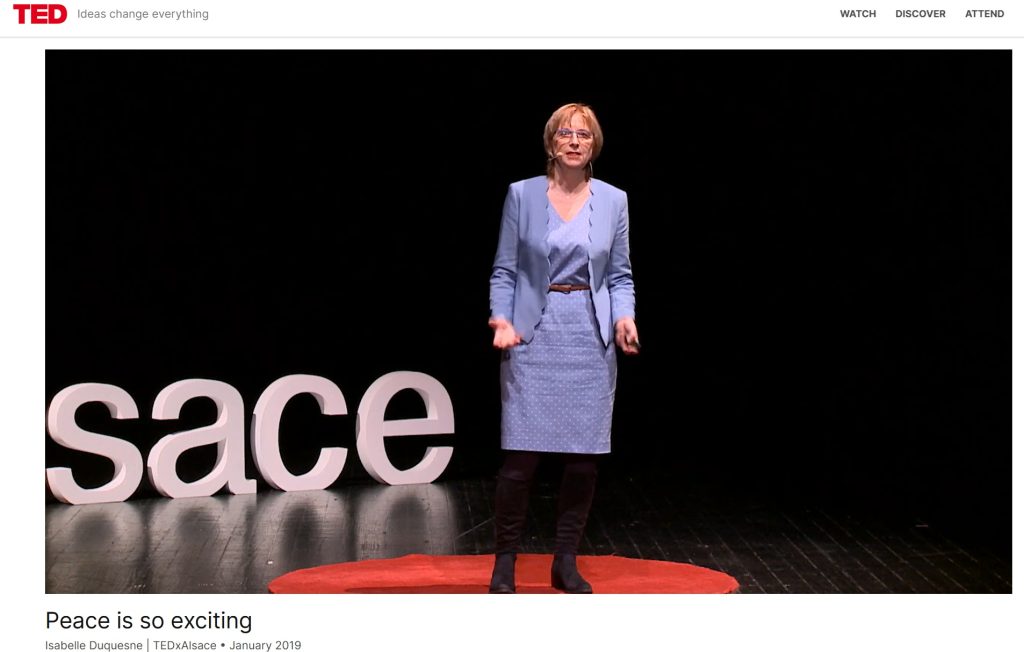
If you need expert advice, do not hesitate to contact Isabelle DUQUESNE directly, director of EUROBOGEN, psychotherapist (PhD), mediator and corporate trainer for 30 years.
See also: Le Management de la Diversité
References :
[1] Information Note No. 23.08, March 2023.
In 2021-2022, 93% of middle school students reported feeling “good” or “very good” in their school and 91% felt safe there. Despite this school climate which they generally describe in a positive light, middle school students report being victims of some violence. The most frequent offenses are theft of school supplies (54%), unpleasant nicknames (44%), insults (43%) and exclusion (43%). Physical violence affects boys more than girls, but girls are more affected by exclusion. 46% of students report having been victims of at least one act of violence repeatedly during the school year. And 6.7% of students report five or more repeated incidents. This situation of high levels of multiple victimization affects sixth-grade students more. Three out of ten students who were victims of violence spoke to someone about it. This mainly concerns friends and relatives, and to a lesser extent, an adult from the college. Finally, one in five middle school students has been a victim of at least one instance of cyberbullying on a repeated basis.
To quote: Traore B., 2023, “6.7% of middle school students report five or more violent incidents repeatedly”, Information Note, No. 23.08, DEPP. (https://doi.org/10.48464/ni-23-08)