At the heart of family dynamics lies an essential element that directly impacts individual and collective well-being: peace. In this article, we explore how creating a peaceful atmosphere within families can catalyze positive social-emotional growth. At the same time, we analyze the consequences of a tense family environment, linking the influence of domestic harmony with professional performance, interpersonal relationships, and mental and physical health. Finally, we examine how effective communication and constructive conflict resolution are part of best practices not only for a peaceful family environment, but also for well-being at work. Finally, we examine how effective communication and constructive conflict resolution are part of best practices not only for a peaceful family environment, but also for well-being at work.
The Beneficial Influence of a Peaceful Environment
Family peace provides a backdrop conducive to individual development. Harmonious interactions and transparent conflict resolution promote the acquisition of life skills such as empathy, collaboration, and communication. These skills reinforce healthy self-esteem and the cultivation of lasting social bonds. However, the family is also the stage where personalities test their strength, independence, and power, through jealousy, control, and selfishness. Therefore, an understanding of opposites and tensions is necessary to guide us toward a peace that is solidly achieved through effort.
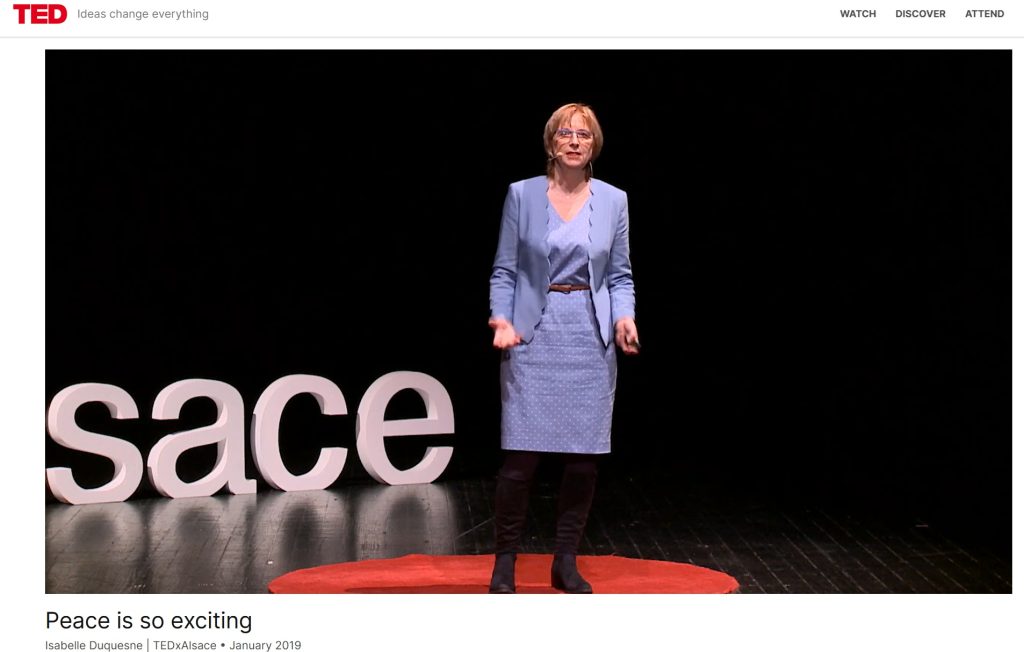
See also: Isabelle DUQUESNE talks to us about resilience
The Harmful Effects of a Strained Family Environment
Inevitably, a tense or conflictual family atmosphere has a detrimental impact on a child’s psychological development and future behavior. Regular conflicts create a stressful atmosphere, undermining self-confidence in young children and causing teenagers to become passive or aggressive. Young people exposed to constant family conflict will have to compensate on their own with inappropriate behaviors that give them a semblance of confidence. Deprived of access to their true human strength, which has remained hidden for too long beneath the surface of conflict, a family under constant stress can hinder the development of identity and relationships with others among all its members: children, young people, and adults.
See also : Formation sur la Gestion des Conflits (Niv. 1)
Impact on Work Performance and Productivity
Emotional stability within the family circle plays a significant role in professional performance. When family members live together harmoniously or have respectful and appreciative arrangements if they do not share a home, they are more likely to feel supported, strong, and useful, without questioning their place or role; this also influences their commitment to work. A home free from excessive turbulence allows individuals to focus more effectively on their professional responsibilities, optimizing the achievement of their goals and their well-being in the performance of their duties.
The Influence of Family Harmony on Interpersonal Relationships
Interaction skills at home naturally extend to interpersonal relationships beyond the family circle. The communication and conflict resolution skills practiced daily among peers and across generations are reflected in external social interactions. Individuals who have grown up in a peaceful environment are better equipped to develop meaningful relationships and deal maturely with the disagreements inherent in any relationship.
Of course, private and professional life are by no means necessarily mirror images of each other; the suggestion here is simply that family peace can contribute to social peace at work.
Long-Term Effects on Mental and Physical Health
Family memories weave the fabric of individuals’ mental and physical health. Experiences forged within the family cocoon have a lasting impact. A calming home environment reduces symptoms of stress, anxiety, and depression. Conversely, a tumultuous atmosphere can sow the seeds of long-term mental health problems. Thus, family peace proves to be a key factor in well-being throughout life.
Effective Communication and Constructive Conflict Resolution
Maintaining lasting peace requires open communication and constructive management of disagreements. Open communication allows concerns to be expressed respectfully, while constructive conflict resolution prevents harmful tensions from building up. These skills help to foster a healthy family environment, promoting mutual understanding and creating an environment conducive to growth.
A Partner for Family Peace: The Commitment of AGF 67
Nowadays, organizations such as AGF 67 play a significant role in supporting families and promoting domestic peace. This association is actively committed to supporting households, offering resources and initiatives to strengthen bonds and encourage a peaceful environment. Working together with local families, AGF 67 strives to create spaces conducive to effective communication and constructive conflict resolution, thereby helping to cultivate a harmonious balance.
Conclusion
Family peace is a cornerstone of individual and collective well-being and fulfillment. A peaceful atmosphere promotes the acquisition of essential skills, while mitigating the harmful effects of constant tension. Family harmony influences work performance, the quality of interpersonal interactions, and social health within an organization.
At EUROBOGEN, our seminars on conflict resolution, mediation, and WELL-BEING at work (offered exclusively at the client’s request) include a module on optimizing family WELL-BEING.
In its training courses on HUMAN ENGINEERING, EUROBOGEN combines individual growth with collective success, company performance with staff well-being, placing socio-emotional transformation at work in the hands of each person—independent, unique, but connected to others.
For more information, please do not hesitate to contact us.
See also : L’intelligence émotionnelle au service du leadership